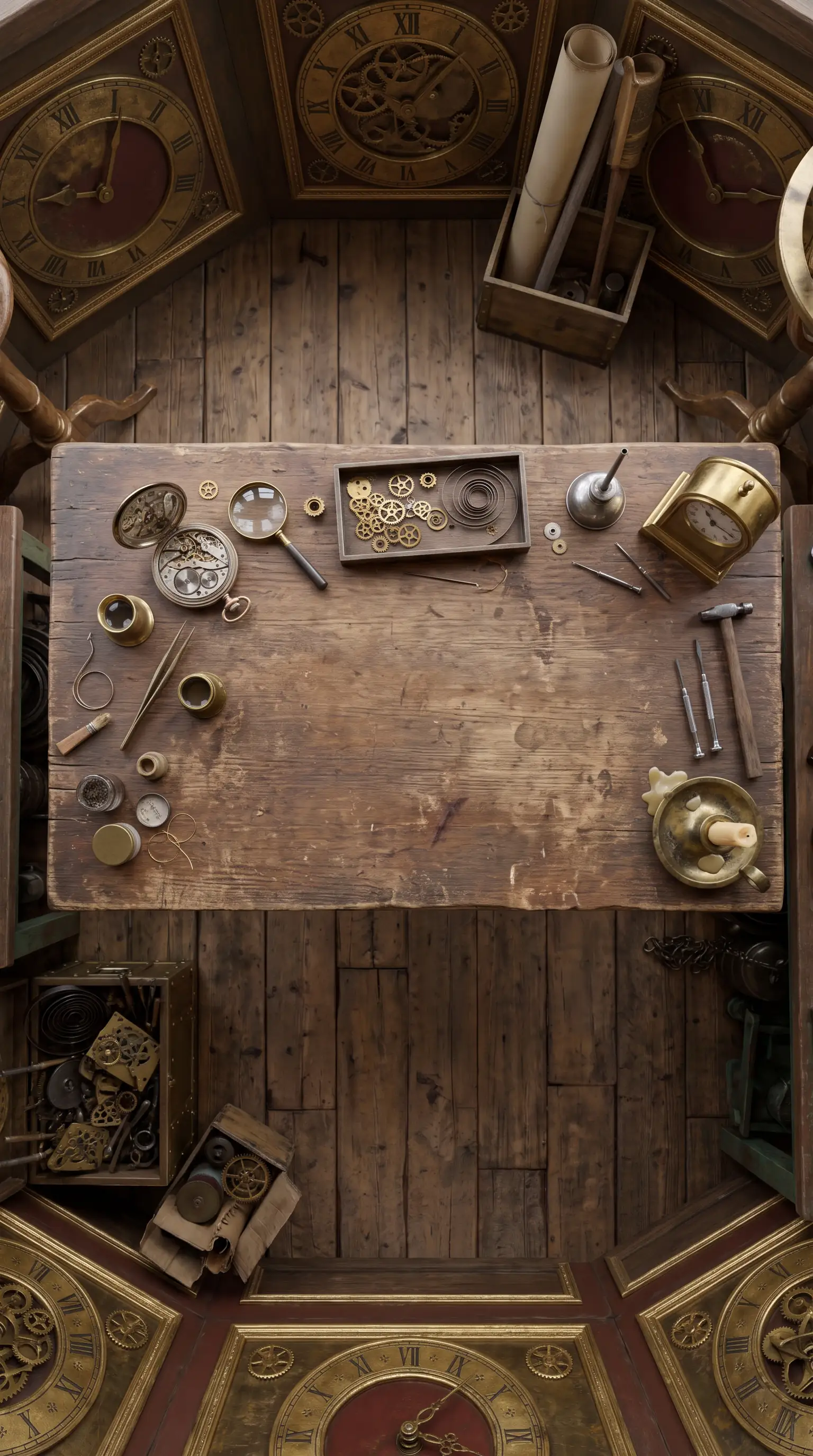


In development
iKaruProject
Turn it. Open it to its grain. See whether it keeps its world open.
TechnotopiaObjects as beings
Research work by Ludovic Garattini, developed in his own name. It is in development; nothing on this page is for sale.
About iKaru
iKaru is an app for understanding how technical objects work. Choose a thing, from a diode to a steam carriage, Foucault’s pendulum or a nuclear power station; open it down to its parts, watch it at work, and learn what keeps it running: the energy and the materials it draws on, the care it asks for, the instruments that watch over it.
It was made for teaching, with a corner of its own for young children. It runs on phones, tablets and the web, and is in beta.
The iKaru Project is the research behind it: a way of reading technical objects after the philosopher Gilbert Simondon, which asks of any being how it fits into its surroundings, what it takes from the Earth, and what it leaves possible for what comes after.
Of every object, iKaru asks three questions.
- Where was it born?
- How does it live in its world?
- What is inside?
iKaru is named after a Japanese bird, the ikaru, or Japanese grosbeak: a finch with a thick yellow bill that turns hard seeds over and splits them open. Old Japanese names called it the seed-turner and the seed-splitter. iKaru does the same with the things people make. Turn an object, open it with three fingers, and go down to its grain: the parts and materials that carry its know-how from one generation of objects to the next. Then step back and watch it at work in its surroundings. See what it draws on, what it gives back, and whether it goes with the flows around it or forces them. Of every object, iKaru asks three questions. Where was it born? How does it live in its world? What is inside? Unlike the bird, iKaru gives every seed back whole.
These words are the app’s own.
The Crossing
The app opens with a key. “Here is what looks like a simple key. What would you say it is for?”

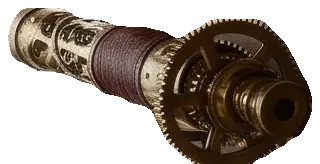
Its teeth draw a line of heights: a code cut in metal, which only the pins of its lock can read. With no key every pin rests at the same height and the lock stays shut; the right key pushes each pin up to its own step, and the lock turns. Its true cousins are the punched card of a loom and the cylinder of a music box: shapes that carry a code. “You have just looked at an object from the inside. iKaru does that for every thing.”
Then the sails are set. Six small questions of taste, with no wrong answer, are the wind:
 Balance a tower of stones
 The tick of a clock
 Magnets and copper wire
 A storm and its lightning
 To see the tiny paths inside a grain of sand
 I push until it gives

They carry the ship to one of Technotopia’s eleven lettered territories. “Land in sight!” You go ashore as a citizen of its nation, and your home port is yours to change whenever you like.
IThe world
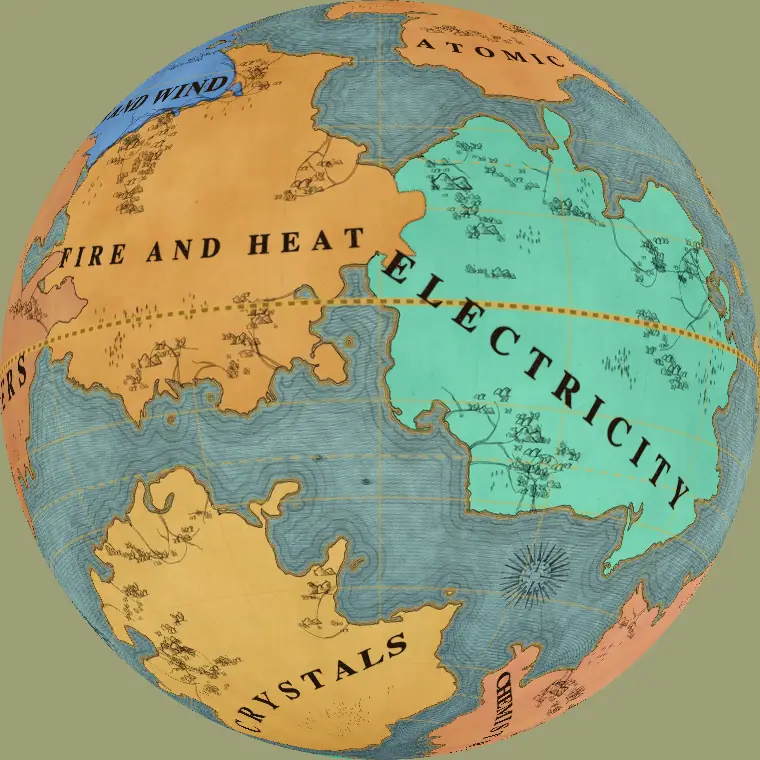
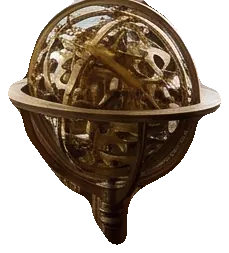
One globe, seen twice: from a machine it is Technotopia, from a human Terra.
Technotopia sorts the objects by how they work inside, on 11 continents of operations; Terra sorts the same objects by what they serve, on 13 islands of use.
TechnotopiaObjects as beings
 Springs and levers
 Water and wind
 Fire and heat
 Crystal germination
 Burning and mixing
 Electricity
 Magnets and held charges
 Chips and glowing diodes
 Supercold matter
 Atomic power
 Life's own machines
TerraObjects as slaves
 Getting around
 Telling the time
 One-way current
 Heating and cooling
 Making things
 Getting power
 Doing sums
 Lighting
 Sending messages
 Killing and defending
 Winding up and letting go
 Measuring things
 Mining
Every word in the app exists in two lenses, Public and Scholar; these are the public’s. The registry behind the globe is a proposal under work.
Seven globes, one for each era
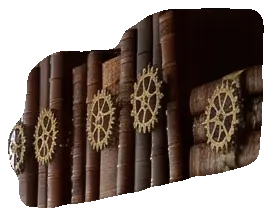
Hold the globe: a brass band of seven era wheels stands round it, from Antiquity to Today.
Antiquity
Still under the sea of Technotopia: Electricity, Magnets and held charges, Chips and glowing diodes, Supercold matter, Atomic power.
17 of the 156 objects on the globe existed, on the thread:
Middle Ages
Still under the sea of Technotopia: Electricity, Chips and glowing diodes, Supercold matter, Atomic power.
32 of the 156 objects on the globe existed, on the thread:
16th-17th century
Still under the sea of Technotopia: Electricity, Chips and glowing diodes, Supercold matter, Atomic power.
49 of the 156 objects on the globe existed, on the thread:
18th century
Still under the sea of Technotopia: Chips and glowing diodes, Supercold matter, Atomic power.
68 of the 156 objects on the globe existed, on the thread:
19th century
Still under the sea of Technotopia: Chips and glowing diodes, Supercold matter, Atomic power.
93 of the 156 objects on the globe existed, on the thread:
20th century
Every continent of Technotopia has risen.
129 of the 156 objects on the globe existed, on the thread:
Today
Every continent of Technotopia has risen.
156 of the 156 objects on the globe today, on the thread:
A finger held on the globe closes the ring of molten metal round it; the globe draws back and the band of era wheels stands round it. Turned anticlockwise it goes back in time, clockwise it comes forward, one era for each seventh of a turn; a chevron slides along the band and locks on the era. On Technotopia the continents whose way of working did not exist yet sink under the sea, and rise again as one comes forward; on Terra the continents stay and only the objects change.
For Antiquity the dated catalogue proposes 23 new objects; three of them:
- Antikythera mechanism c. 150-100 BCEA Greek bronze box of gears that worked out where the Sun, Moon and planets would be on any date.
- Alembic still c. 1st-3rd century CE (Alexandria)A still used by early chemists to separate liquids.
- Areni-1 winery c. 4100-4000 BCEThe oldest known winery, a clay press and vat found in a cave in Armenia.
For Middle Ages the dated catalogue proposes 25 new objects; three of them:
- Counterweight trebuchet 12th centuryA huge siege engine that hurled heavy stones over and against castle walls.
- Cast church bell medieval Europe (from c. 8th century)A large bronze bell that rang the hours and called people together.
- Hopped beer 9th century (first documented use); 1079 in German brewingBeer flavoured and kept fresh with hop flowers, brewed in monasteries.
For 16th-17th century the dated catalogue proposes 23 new objects; three of them:
- Pendulum clock (Huygens) 1656Christiaan Huygens' clock, the first to keep time to within a minute a day.
- Cast plate glass 1688Large flat sheets of glass for mirrors, first cast in France.
- Bottle-fermented sparkling wine 1662 (Christopher Merret, Royal Society paper)Wine made bubbly by a second fermentation inside a strong glass bottle.
For 18th century the dated catalogue proposes 28 new objects; three of them:
- Centrifugal (flyball) governor 1788A spinning device James Watt added to steam engines to keep their speed steady.
- Argand lamp 1780 (patented 1784)An oil lamp much brighter than a candle, used in homes and lighthouses.
- Ship's sauerkraut cask 1768-1775 (James Cook's first and second voyages)Barrels of fermented cabbage taken on long sea voyages to keep sailors healthy.
For 19th century the dated catalogue proposes 29 new objects; three of them:
- Foucault's gyroscope 1852Léon Foucault's spinning wheel in rings, built to show that the Earth turns.
- Döbereiner's lamp 1823A table lighter that makes a flame without a match.
- Anaerobic biogas digester 1859 (leper asylum, Bombay); 1895 Exeter street lampsA closed tank where waste rots without air and gives off gas that can burn.
For 20th century the dated catalogue proposes 44 new objects; three of them:
- Wind-up radio (Baylis) 1991-1995 (idea 1991, production from 1995)Trevor Baylis's radio that works without batteries, made for places without electricity.
- Chain Home radar 1938A line of British radar stations that spotted enemy aircraft long before they arrived.
- PCR thermal cycler 1983 (Kary Mullis); 1985 first paperA machine that copies a tiny bit of DNA millions of times so it can be studied or tested.
For Today the dated catalogue proposes 65 new objects; three of them:
- Energy Vault gravity storage tower 2020 (test tower, Castione-Arbedo, Switzerland)A tower of cranes that stores electricity by stacking giant concrete blocks.
- Qi wireless charging pad 2010A flat pad that charges a phone laid on it, with no cable plugged in.
- CRISPR-Cas9 gene editor 2012 (Jinek, Charpentier, Doudna et al.)A molecular tool that cuts DNA at a chosen spot so genes can be changed.
The catalogue holds 262 dated objects with their sources; every entry is a proposal until Ludovic Garattini validates it, and most are not yet objects of the app.
At the foot of the globe, as in the app: the ring of molten metal, the ways of the app in it.
IIThe territory
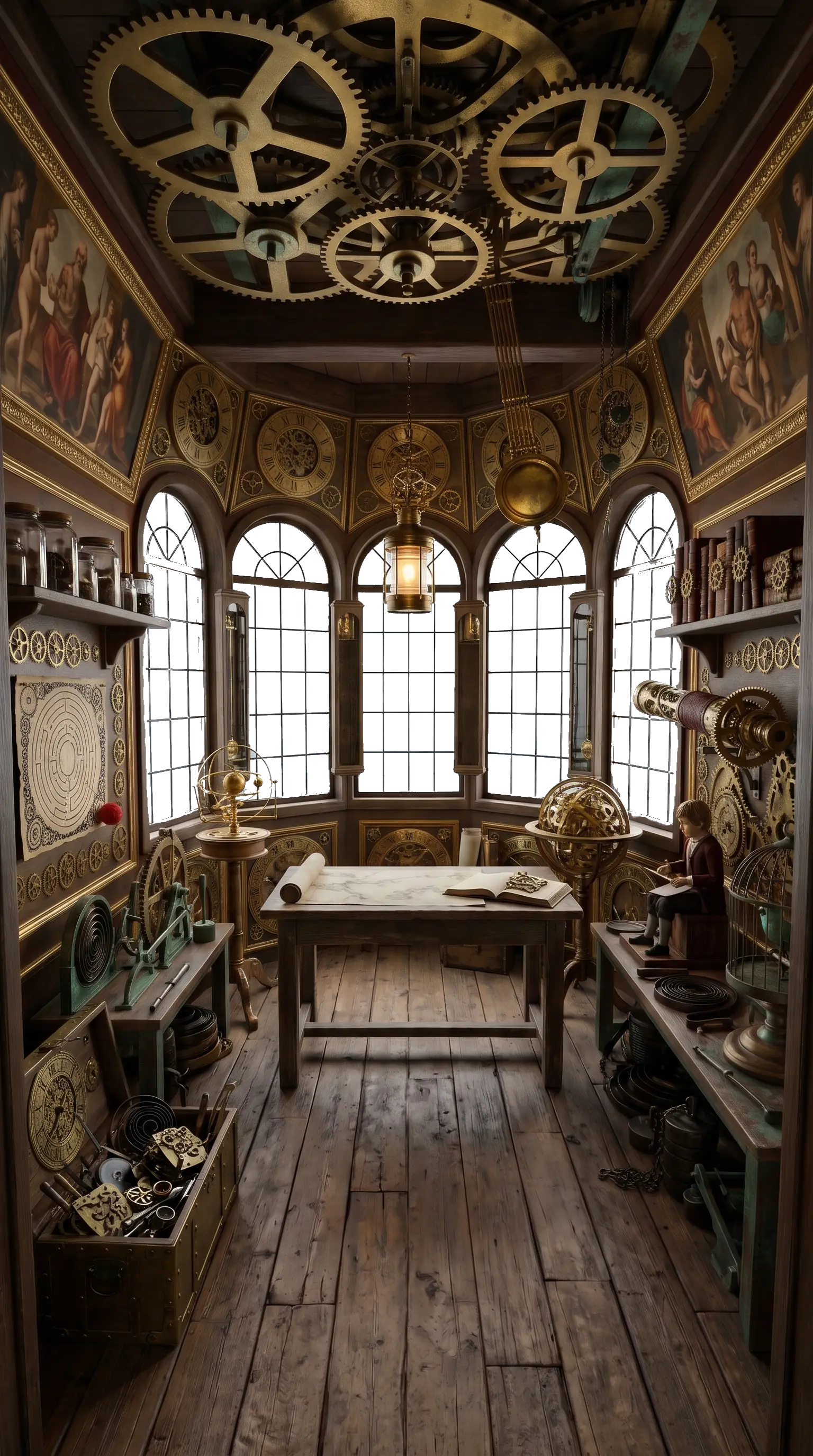
Each territory has a cabin of its own. This one is the watchmaker’s, of the territory Springs and levers.
Its things open the app’s functions:
A painted room, seen from its door: “Things that push, pull, bend and spring back.” The sea in its windows follows the hour.
In the app one steps into a territory’s cabin from the globe: “Hold a territory's badge, then slide up: you step into its cabin”, or by the ring at the foot.
The cabins belong to the app for iPhone and iPad, which is in development. Here the room is its picture: the things light up and say what they open, and open nothing.
II · the corridor
Thirteen cabins
Each world has a cabin of its own, and each of Technotopia’s eleven territories another, in its own matter, colour and name: Technotopia’s cabin first, the eleven rooms, and last Terra’s, the captain’s room. A sideways swipe goes from one cabin to the next, as in the app.
 The worldTechnotopia’s cabinThe mechanologist’s observatory-workshop
Technotopia’s own room, in night-blue lacquer and gilt brass: a brass world engine under a ceiling painted with the tree of machines, the names of Galileo Galilei, Gilbert Simondon and Marie Curie over its windows, ARTS ET MÉTIERS inlaid in its floor.
 ASprings and leversMechanical: cohesion, contact, elasticity
Things that push, pull, bend and spring back.
 BWater and windFluids: ordered momentum
Machines driven by water, air and steam in motion.
 CFire and heatThermal: disordered agitation
Heat that moves things, warms things or changes their size.
 DCrystal germinationPhase and structure formation
Matter that freezes, melts or grows crystals from a seed.
 EBurning and mixingChemical: bond rearrangement
Substances that burn, react, harden or give a current.
 FElectricityFree charges: conduction and emission
Currents in wires, motors, transformers, valves and antennas.
 GMagnets and held chargesMatter in a field: polarization, magnetization and coupling
Materials that hold a charge or a magnetism: they point north, store a spark, ring like a bell or turn a screen dark.
 HChips and glowing diodesSolid-state carriers: bands and junctions
Diodes, transistors, light-emitting diodes and solar cells in a sliver of crystal.
 ISupercold matterCollective quantum states
Matter so cold that its current flows without loss.
 JAtomic powerNuclear: fission, decay, fusion
Energy from splitting, decaying or fusing atoms.
 KLife's own machinesBiological: recognition and replication
What living cells do: digest, copy and defend.
 The worldTerra’s cabinThe captain’s room
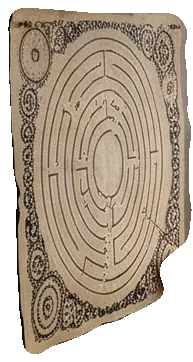
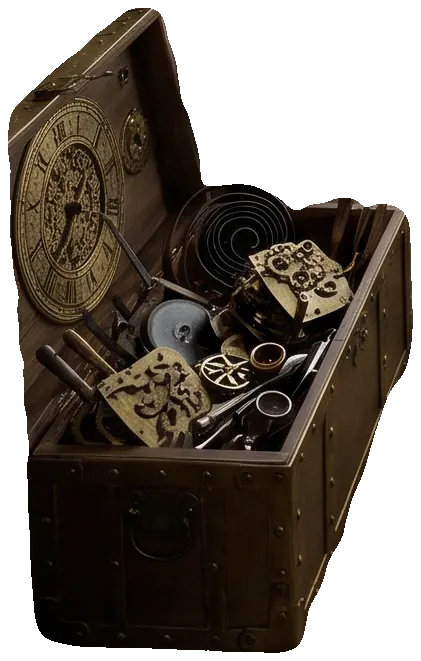
Terra’s cabin is the captain’s room, over the globe: its chest holds every object of the world, its jars and its labyrinth open every game.
IIIThe object
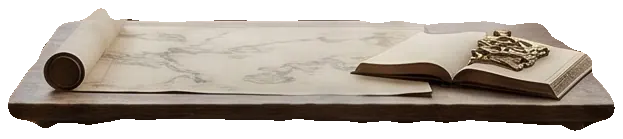
On the chart table, the registry: 156 objects stand on the globe today, strung here on one thread from Antiquity to Today.
Each stands under the name the app gives it, with its kind and the uses it stands under. Some work the same way and serve different uses, such as the bow and the spring motor. In the registry 135 of them are still marked as proposals.
The Cugnot fardier and the Pascaline are, in the app’s words, “Two machines from the Paris museum of technology, rebuilt in 3D from public documents (not the museum's own models).”
- Open-pit copper minea set of working wholesMining
- Bowa working wholeWar
- Crossbowa working wholeWar
- Fermentation vata set of working wholesMaking
- Antikythera mechanisma working wholeSums
- Ballista (torsion catapult)a working wholeWar
- Roman treadwheel crane (polyspastos)a working wholeWind-up
- Force pump (Ctesibius)a working wholeMining
- Water milla set of working wholesPower
- Hero's aeolipilea working wholePower
- Roman hypocausta working wholeWarm and cool
- Bronze Age sworda working wholeWar
- Alembic stilla working wholeMaking
- Bloomery furnacea working wholeMaking
- Clay oil lampa working wholeLight
- Areni-1 winerya set of working wholesMaking
- Godin Tepe beer jara working wholeMaking
- Spring motora building blockWind-up, Moving
- Counterweight trebucheta working wholeWar
- Weight-driven tower clock (verge escapement)a working wholeTime
- Post windmilla set of working wholesPower
- Su Song's astronomical clock towera working wholeTime
- Smokejacka working wholeMaking
- Trotting horse lampa working wholeLight
- Medieval church bella working wholeTime
- Dardanelles Guna working wholeWar
- Medieval European blast furnacea working wholeMaking
- Bombard (Mons Meg)a working wholeWar
- Shen Kuo's magnetic needle compassa working wholeMeasuring
- Peregrinus's pivoted dry compassa working wholeMoving
- Medieval brewhousea set of working wholesMaking
- Roquefort ripening cavea set of working wholesMaking
- Pascalinea working wholeSums
- Flintlock musketa working wholeWar
- Mechanical watcha working wholeTime
- Pendulum clock (Huygens)a working wholeTime
- Leibniz stepped reckonera working wholeSums
- Mercury barometer (Torricelli)a working wholeMeasuring
- Water-wheel mine drainage pump (De re metallica)a working wholeMining
- Savery steam pumpa working wholeMining
- Florentine sealed thermometera working wholeMeasuring
- Papin's steam digestera working wholeWarm and cool
- Cast plate glassa working wholeMaking
- Wheellock firearma working wholeWar
- Coal-fired reverberatory furnacea working wholeMaking
- Guericke's sulphur globea working wholePower
- Gilbert's versoriuma building blockMeasuring
- Bottle-fermented sparkling winea working wholeMaking
- Saltpetre nitre beda set of working wholesWar
- Cugnot fardiera working wholeMoving
- Centrifugal (flyball) governora building blockPower
- Cylinder music boxa working wholeWind-up
- Harrison H4 marine chronometera working wholeTime
- Hydraulic press (Bramah)a working wholeMaking
- Hydraulic ram pump (Montgolfier)a working wholePower
- Newcomen atmospheric enginea set of working wholesMining
- Montgolfier hot-air balloona working wholeMoving
- Huntsman crucible steela working wholeMaking
- Wedgwood pyrometera working wholeMeasuring
- Argand lampa working wholeLight
- Coke-fired blast furnacea set of working wholesMaking
- Ramsden's plate electrostatic machinea working wholePower
- Bennet's gold-leaf electroscopea working wholeMeasuring
- Leyden jara building blockPower
- Gowin Knight's steel compassa working wholeMoving
- Ship's sauerkraut caska working wholeMoving
- Jenner's cowpox vaccinea working wholeWar
- Franklin stovea working wholeWarm and cool
- Rotary convertera working wholePower
- Hydraulic jacka working wholeMoving
- Refrigeratora set of working wholesWarm and cool
- Radio antennaa building blockMessages
- Incandescent light bulba working wholeLight
- Safety bicycle (Rover)a working wholeMoving
- Sholes and Glidden typewritera working wholeMessages
- Babbage Difference Engine No. 2a working wholeSums
- Fourneyron water turbinea working wholePower
- Phonograph (Edison)a working wholeMessages
- Stephenson's Rocketa working wholeMoving
- Dewar vacuum flaska working wholeWarm and cool
- Nasmyth steam hammera working wholeWind-up
- Davy safety lampa working wholeLight
- Perkins vapour-compression machinea working wholeWarm and cool
- Hampson–Linde air liquefiera working wholeMining
- Linotype machinea working wholeMessages
- Voltaic pilea working wholePower
- Döbereiner's lampa working wholeLight
- Gramme dynamoa working wholePower
- Cooke and Wheatstone needle telegrapha working wholeMessages
- Aluminium electrolytic capacitora building blockPower
- Poulsen telegraphonea working wholeMessages
- Anaerobic biogas digestera set of working wholesPower
- Pasteur swan-neck flaska working wholeMeasuring
- 1N4007 diodea building blockOne-way
- Vacuum diode c.1920a working wholeOne-way
- Czochralski pullera working wholeWarm and cool, Making
- Balcony solar kita set of working wholesPower
- Quartz crystala building blockTime
- Battery cella building blockPower
- Fission reactora set of working wholesPower
- SQUID magnetometera working wholeMeasuring
- Fighter jeta set of working wholesWar
- Curta calculatora working wholeSums
- Wind-up radio (Baylis)a working wholeMessages
- Wright Flyera working wholeMoving
- Hydraulic excavatora working wholeMining
- Whittle W.1 turbojeta working wholeMoving
- Honeywell T87 round thermostata working wholeMeasuring
- Verneuil synthetic ruby furnacea working wholeTime
- Pilkington float glass linea set of working wholesMaking
- Alkaline batterya building blockPower
- Car catalytic convertera building blockMoving
- Cathode-ray tube televisiona working wholeMessages
- Neon sign tubea working wholeLight
- Mercury-arc rectifiera working wholeOne-way
- Maiman's ruby lasera working wholeMeasuring
- Sharp LCD pocket calculatora working wholeSums
- Intel 4004 microprocessora building blockSums
- Bell Labs silicon solar batterya working wholePower
- Holonyak's red light-emitting diodea building blockLight
- Cat's-whisker crystal detectora building blockOne-way
- IGBT power modulea working wholeOne-way
- Indomitable, the first whole-body MRI scannera set of working wholesMeasuring
- ML-500 superconducting maglev test vehiclea working wholeMoving
- Ionization smoke detectora working wholeMeasuring
- USS Nautilus nuclear submarinea set of working wholesMoving
- SNAP-3 radioisotope generatora working wholePower
- PCR thermal cyclera working wholeMeasuring
- Recombinant human insulina working wholeMaking
- Mains chargera working wholePower
- LED lampa working wholeLight
- Flywheel energy storage plant (Stephentown)a set of working wholesPower
- GravityLighta working wholeLight
- Enercon E-126 wind turbinea working wholePower
- Ingenuity Mars helicoptera working wholeMoving
- RS-25 rocket enginea working wholeMoving
- PS10 solar power towera set of working wholesPower
- Giga Press die-casting machinea working wholeMaking
- RepRap 3D printera working wholeMaking
- Sodium-ion batterya building blockPower
- Hydrogen fuel-cell car (Toyota Mirai)a set of working wholesMoving
- Qi wireless charging pada working wholePower
- USB-C cablea building blockPower
- FBAR phone filtera building blockMessages
- Shanghai supercapacitor busa set of working wholesMoving
- Apple M1 chipa building blockSums
- USB flash drivea working wholeMessages
- Perovskite solar cella building blockPower
- Large Hadron Collidera working wholeMeasuring
- L0 Series maglev traina working wholeMoving
- Google Sycamore quantum processora working wholeSums
- Curiosity rover's nuclear generator (MMRTG)a working wholePower
- EPR nuclear reactor (Taishan 1)a set of working wholesPower
- Akademik Lomonosov floating nuclear power planta set of working wholesWarm and cool
- Pocket nanopore DNA sequencer (MinION)a working wholeMeasuring
- mRNA vaccinea working wholeWar
IVThe parts
The last level opens the object itself. This is the 1N4007 diode, as the app draws it: “Silicon chip (the part that does the work)” between two wire legs, in a black plastic case about five millimetres long. In a mains charger it is one of four diodes that turn the back-and-forth mains current into current that flows one way.
Go down the page and it comes apart, part by part; go up and it closes again. The sizes and facts come from the app’s specification file, which lists its sources: manufacturers’ data sheets, a maker’s material declaration and a measured photograph of a cut diode.
This browser cannot draw the 3D view: WebGL 2 is switched off or not available.
- Leg, striped endCopper wire 0.8 mm thick, tin-plated outside the case; its inner end is headed like a nail.
- Grey stripePainted on the cathode's end, about 0.8 mm wide on the measured section; no data sheet gives its size.
- Plastic caseMoulded epoxy, about 75 % silica; 5.0 mm long, 2.36 mm across (data sheets: 4.06 to 5.21 mm long).
- SolderLead, tin and silver (92.5 / 5 / 2.5), about 35 µm per joint, by a maker's material declaration for this case.
- Silicon chipSilicon, drawn 0.9 mm wide as measured on a cut diode; published chips run to 1.27 mm.
- Rubbery sealA translucent grey silicone ring round the chip's edge, between the two copper heads.
- Leg, plain endThe same copper wire, its head soldered to the chip's other face.
Reached from the ring at the foot of every page of the app
V The games
Five games; their clue is always what a thing does, never when it was made. Each wheel opens a short one, to play here.
The ideas behind it
VI Nine questions, never one number
The Inchoation Index, after Gilbert Simondon: nine questions asked of one object in one situation, each judged twice. Here, nine double stars; turn the ring.
1N4007 diode in the charger · in use
- from how it was made closes its world level 2
- where it is used closes its world level 2
D1 Potential left over After this thing has done its job, how much is left for something new: reuse, repair, materials that come back?
- from how it was made closes its world level 2
- where it is used closes its world level 2
D2 How it fits in Does it ride what is already there (a flow, a place), or does it force its surroundings to serve it?
- from how it was made closes its world level 2
- where it is used half and half level 3
D3 Open to change Can people still repair it, adjust it, or reinvent it, or was it finished once, at the factory?
- from how it was made closes its world a lot level 1
- where it is used closes its world level 2
D4 Rhythm Does it move at the pace of what feeds it, or does it keep its own beat whatever happens around it?
- from how it was made closes its world level 2
- where it is used half and half level 3
D5 Well put together Does each part do several useful things, or does it need many extra parts just to protect itself?
- from how it was made keeps its world open level 4
- where it is used keeps its world open level 4
D6 Locked in Is it stuck with one plug, one standard, one place or one way of being made, or split into halves that only work together, or can it adapt?
- from how it was made half and half level 3
- where it is used half and half level 3
D7 Has a future Does the idea behind it keep producing new inventions?
- from how it was made opens its world a lot level 5
- where it is used opens its world a lot level 5
D8 What it takes from the Earth What does it take for good from the Earth to exist, and does what it leaves behind come back into use?
- from how it was made closes its world level 2
- where it is used closes its world level 2
D9 Open to people Can ordinary people understand it, repair it and have a say, or are they just users?
- from how it was made closes its world level 2
- where it is used closes its world level 2
A rubric under work, not yet a validated measure. Its stars are read one by one, never added up.
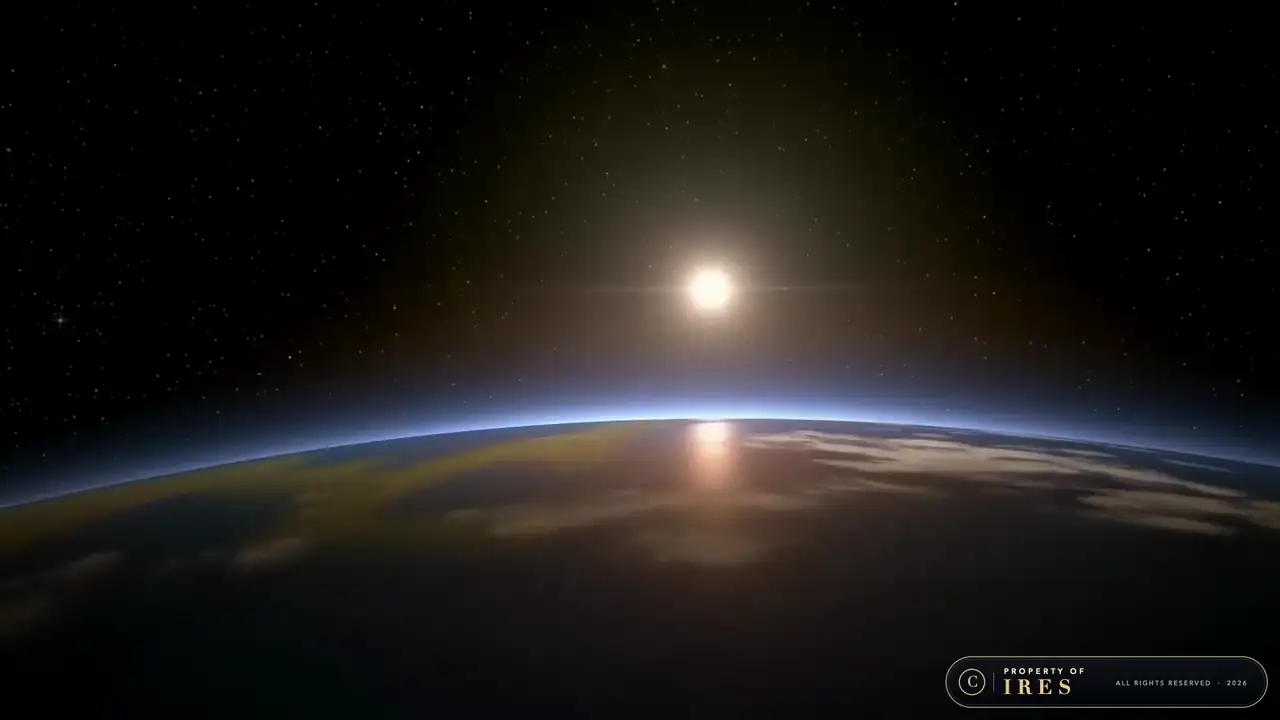
In the app the film runs in front of the globe. Here it starts only if you ask, with its song. Among its last words: “They need us. As much as we need them.”
VIIIThe door
“The web edition of iKaru: a mains USB charger opened to its grain, the 1N4007 diode inside it, and two machines from the Musée des Arts et Métiers, in 3D, each part with its card and its profile.”
Web edition, early preview: not the finished app
iKaru is research work by Ludovic Garattini, developed in his own name, and in development. Nothing here is for sale.